The Art of Picking a Doubles Partner (Without Ruining a Friendship)
Let’s get one thing straight: your doubles partner is the most important piece of equipment you own. More important than your $250 thermoformed paddle. More important than your court shoes. More important than that overgrip you replace every three sessions like a responsible adult.
You can have the filthiest erne in your zip code, but if you and your partner are giving each other the silent treatment after game two, none of it matters. Doubles pickleball is a relationship — and like all relationships, it requires compatibility, communication, and the occasional awkward conversation about who takes the middle ball.
The Middle Ball Problem (It’s Always the Middle Ball)
Every doubles partnership eventually confronts the same existential crisis: the ball comes down the middle, both players freeze for a microsecond, and it drops untouched between them like a sad little divorce metaphor.
Or worse — both players swing at it, paddles collide, and now you’ve got a dead ball and two bruised egos.
Here’s the unsexy truth: the best doubles teams aren’t the ones with two individual 5.0 players. They’re the ones who have settled, definitively and without lingering resentment, who takes the middle ball. On the pro tour, this is typically the forehand player. At rec, it’s typically whoever called “MINE” louder. Neither system is perfect, but at least have a system.
The fix: Before your next session, actually talk about it. The forehand player generally takes middle balls. If you’re stacking, the player whose forehand covers center takes priority. Say it out loud. Make it boring. Boring wins points.
Compatibility Matters More Than Skill
You know what’s worse than losing 11-2? Losing 11-2 while your partner audibly sighs every time you miss a return. Skill gaps are manageable. Attitude gaps are fatal.
When evaluating a potential doubles partner, here’s what actually matters — ranked by importance:
1. Emotional Regulation
Can this person miss three returns in a row without spiraling? Can they watch you sail a dink long without making a face that says “I’m already composing the text to my other partner”? Emotional stability on the court isn’t optional — it’s the foundation everything else sits on.
The pros know this. Watch Ben Johns after his partner hits a ball into the net. He doesn’t flinch. He resets. He taps paddles. That’s not just sportsmanship — it’s competitive strategy. The moment you let frustration show, you’ve told your opponents exactly where the crack in your team is.
2. Communication Style
Some players are talkers. They want to call every ball, strategize between points, and debrief after every game. Other players want to zone in quietly and let their play do the talking.
Neither style is wrong, but mixing them without awareness is a recipe for friction. If you’re the type who needs to talk through strategy mid-game, don’t partner with someone who interprets that as criticism. If you prefer silence, don’t partner with someone who takes your quiet as disengagement.
Pro tip: Have the meta-conversation early. “Hey, I tend to call a lot of shots — is that helpful or annoying?” It feels awkward for about five seconds and saves you months of passive-aggressive paddle taps.
3. Complementary Play Styles
This is where people think compatibility starts, but it’s actually third on the list. That said, it matters.
The classic formula: one steady, consistent player paired with one aggressive attacker. The “rock and the hammer,” as some coaches call it. One player extends rallies and creates openings. The other puts balls away.
Two rocks? You’ll dink forever and never finish points. Two hammers? You’ll speed up every ball and hand easy counterattacks to any team with patience. The sweet spot is one of each — with both players capable of switching roles when the rally demands it.
4. Fitness and Availability
This one’s practical but real. If your ideal partner plays twice a week and you play six times a week, your partnership has an expiration date. Matching on commitment level prevents the slow drift where one player improves faster than the other and starts eyeing other partners like it’s some kind of DUPR-rated dating app.
The Five Doubles Partner Archetypes
After years of observation at rec centers, tournaments, and the occasional parking lot argument, we’ve identified the five doubles partner archetypes. Know which one you are — and which one you need.
The General: Calls every shot, directs traffic, wants to run the show. Needs a partner who’s comfortable executing without needing to co-captain. Pair with: The Soldier.
The Soldier: Reliable, consistent, does their job without drama. Happy to let someone else make the strategic calls. Pair with: The General.
The Streaker: Capable of absolutely scorching runs where they can’t miss, followed by stretches where they can’t find the court with a GPS. Needs a partner who stays steady when the wheels come off. Pair with: The Anchor.
The Anchor: Never beats you, never loses you. Keeps the ball in play, rarely makes unforced errors. The human equivalent of a 4.2 DUPR. Pair with: The Streaker.
The Vibes Player: Doesn’t care about the score, just wants to have fun and maybe grab tacos after. Needs a partner who also doesn’t care about the score. Pair with: another Vibes Player. (Do NOT pair with The General. Trust us.)
When It’s Time to Break Up
Sometimes it just doesn’t work. And that’s okay. But the breakup conversation in pickleball is somehow more uncomfortable than any romantic breakup because you’re going to keep seeing this person at open play every Tuesday and Thursday for the rest of your natural life.
Signs it might be time:
- You dread game days. If the sport you love has become a source of anxiety because of your partner, that’s a five-alarm signal.
- You’re keeping a mental scoreboard of each other’s mistakes. Partnership means letting the small stuff go. If you can’t, the trust is gone.
- Your play styles have diverged. You’ve been drilling your transition game and they’re still lobbing from the baseline. Growth at different rates isn’t anyone’s fault, but it creates real friction.
- The body language is loud. Turning away after lost points, avoiding eye contact, going quiet — these are the tells that the partnership is running on fumes.
How to do it gracefully: Be direct, be kind, and don’t make it about blame. “I think we’d both benefit from mixing things up and trying different partnerships” is honest without being hurtful. And for the love of all things dink, don’t ghost your pickleball partner. They will find you at open play. They will be on the adjacent court. It will be weird.
Building Chemistry Takes Time
Here’s what nobody tells you: even great partnerships feel awkward at first. You’re going to have miscommunications. You’re going to both leave the middle ball. You’re going to accidentally poach a ball your partner had lined up for a winner and turn it into an unforced error.
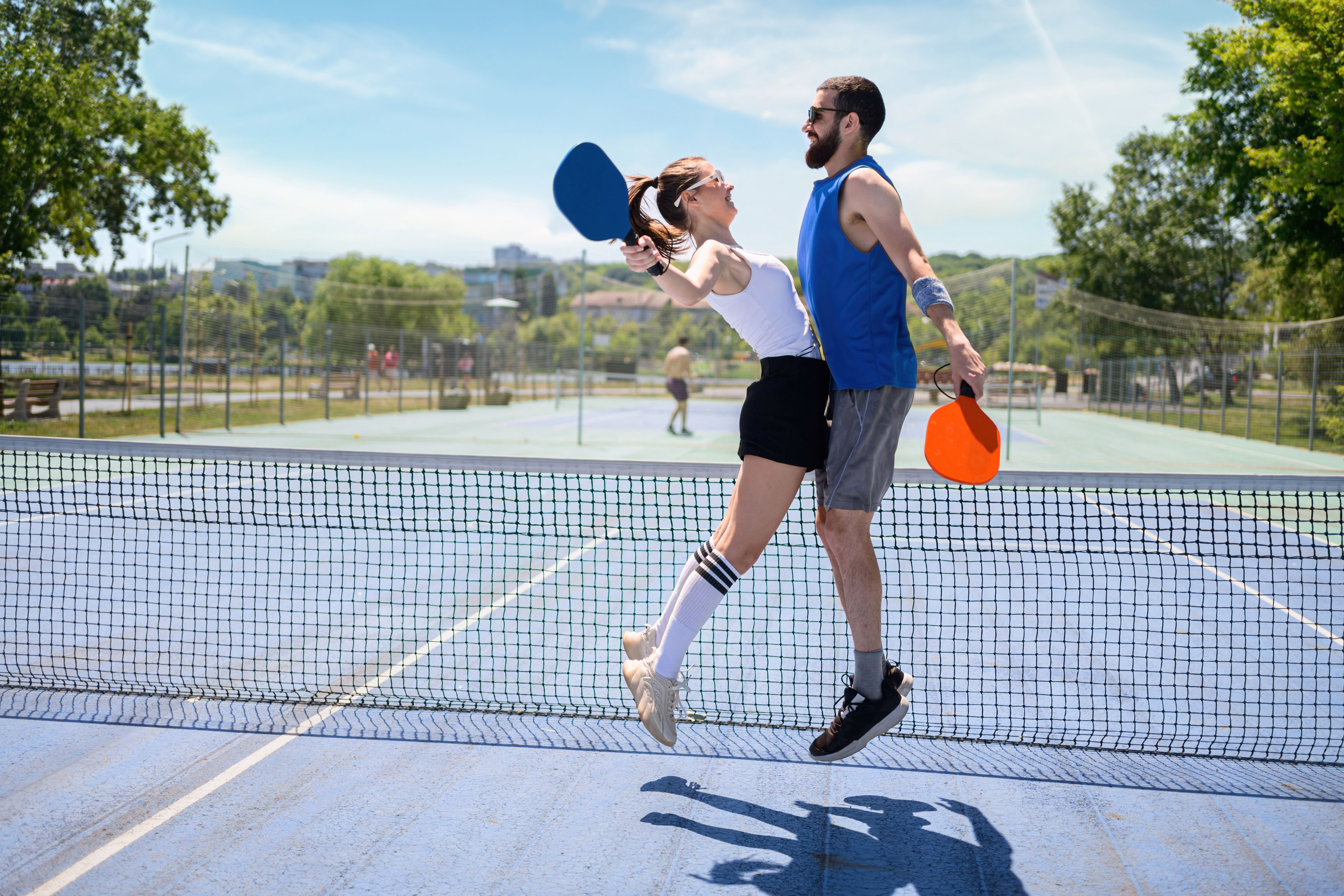
That’s normal. The difference between partnerships that work and partnerships that don’t isn’t the absence of mistakes — it’s how you respond to them. A paddle tap, a “my bad,” a quick reset. These tiny moments of grace are what separate a real team from two individuals sharing a court.
Give a new partnership at least eight to ten sessions before you evaluate it honestly. You need reps together to build the non-verbal communication that makes great doubles teams look telepathic. The pros who seem to move as one unit? They’ve logged hundreds of hours of reps together. You can’t shortcut chemistry.
The Bottom Line
Finding the right doubles partner is part strategy, part personality matching, and part dumb luck. But if you approach it with the same intentionality you bring to your paddle selection — actually thinking about what you need rather than just grabbing whoever’s available — you’ll play better, have more fun, and avoid becoming the cautionary tale your rec group whispers about.
Now go tap paddles with someone who deserves you.