Your Opponent Is Telegraphing Every Shot. You're Just Not Reading the Memo.
There’s a moment in every rec match where you realize you’ve been reacting instead of anticipating. Your opponent winds up, you guess “drive,” and the ball loops over your head for a perfect lob. Three points later, you guess “lob,” and they smash a roller into your hip. You spend the rest of the game in a defensive crouch, hoping for the best, hitting on your heels.
Here’s the thing nobody tells you at the 3.5 level: your opponent is not deceiving you. They are not a pickleball genius. They are doing the equivalent of standing on a chair with a bullhorn screaming “I AM ABOUT TO HIT A BACKHAND DINK CROSS-COURT” and you are politely ignoring them while you wait to react to the ball.
Reading opponents is treated like a black-belt skill reserved for 5.0 pros who watch hours of film. It isn’t. The tells at the rec level are so obvious they border on insulting. You just have to actually look.
Tell #1: The Paddle Doesn’t Lie
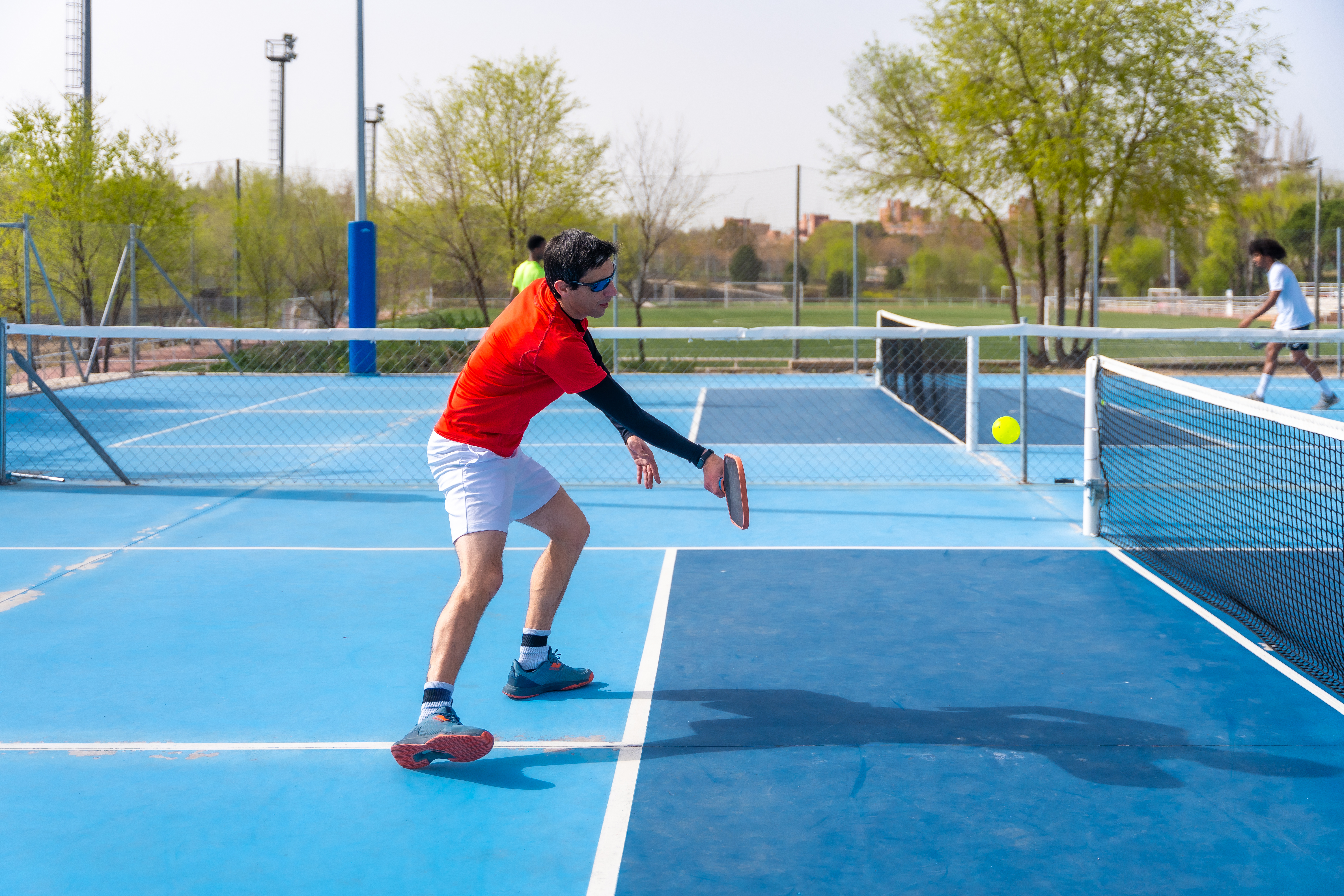
The single biggest tell in pickleball is also the easiest one to see, which is why it’s so embarrassing that nobody watches for it: paddle face angle in the last half-second before contact.
An open paddle face — tilted toward the sky — produces lift. Lift means dink, drop, or lob. There is no closed-face lob. There is no open-face speed-up. The physics will not allow it.
A closed paddle face — tilted toward the ground or perpendicular to it — produces a flat or downward shot. That’s a drive, a roll, or a put-away. The face angle telegraphs the shot a full beat before the swing happens.
The drill: next time you play, stop staring at the ball. Watch the paddle during the windup. By the time your opponent’s paddle reaches their back hip, you already know if it’s a soft ball or a hot ball. Move accordingly. You’ll feel like you’re cheating.
Tell #2: The Shoulder Line Points Where the Ball Goes
This one comes from tennis, and pickleball players have not figured out how to hide it yet. The line your opponent’s shoulders form at contact is, with rare exception, the line the ball travels on.
If their front shoulder is pointed cross-court, the ball is going cross-court. If it’s pointed down the line, the ball is going down the line. If their shoulders are square to the net? That’s either a middle ball or a player who’s been completely jammed — and a jammed player almost always produces a weak floater you can attack.
This is why pros work so hard on a “neutral setup” — they want their shoulders to look the same regardless of where they’re hitting. Your rec opponent is not doing this. Your rec opponent’s shoulders are giving you GPS coordinates.
Watch the shoulders, not the paddle, on every shot they hit from mid-court. You’ll know where the ball is going before they do.
Tell #3: White Knuckles Mean You’re About to Get Hit
Grip pressure is a tell that doesn’t even require you to watch them swing. You can see it during the rally.
A loose, comfortable grip with the paddle hanging slightly relaxed in their hand? That’s a touch shot coming. Dink, drop, reset, soft block. The hand is telling you the ball is going to be feathered, not crushed.
A grip that suddenly tightens — you’ll see the knuckles flash white, sometimes the wrist will quiver — is a speed-up. The body is loading. The hand has decided to commit before the brain has caught up. By the time you see white knuckles, you have somewhere between a quarter-second and a full second to widen your stance, raise your paddle, and protect your face.
The mid-3.0s and lower 3.5s especially cannot hide this. They grip hard because they’re nervous about the shot. The grip is the announcement.
Tell #4: The Eyes Are a Cheat Code
Pros train themselves to look away from their target. Rec players, almost universally, do not. Your opponent will look at the exact spot they intend to hit the ball, often for an uncomfortably long time before they hit it.
The most blatant version of this happens during put-aways at the net. The ball pops up, your opponent’s eyes lock onto the open court, and they swing. By the time their eyes locked on, you should have already started moving. You watched them aim. You watched them load. You watched them swing. And you stood still because you were watching the ball.
Stop watching the ball at the kitchen. Watch their face. Their eyes will tell you where to be a half-second before their paddle tells the ball.
(Caveat: a small number of crafty rec players have figured this out and will deliberately look one way and hit another. They are rare and they are usually grinning. You’ll know them when you see them.)
Tell #5: The Pre-Serve Routine Is a Confession
Before the ball is even in play, your opponent has already told you about their serve. They just don’t know it.
Watch the bounce count. Players who bounce the ball three times and exhale before a serve are about to hit their “safe” serve — usually slow, deep, and middle. Players who skip the bounce entirely and just rip it are going for a winner. Players who toss higher than usual are about to add spin. Players who shuffle their feet awkwardly are about to do something they’re not comfortable with — usually a serve down the line or to your backhand.
You can read return-of-serve setups the same way. The returner who’s standing two feet behind the baseline is planning a deep return. The one creeping in at the baseline is going to chip-and-charge. The one who’s bouncing on their toes is anxious and is about to either crush it or shank it into the net.
Three of these reads in the first two games and you’ll know exactly what their A-game is and how to take it away.
The Trap: Don’t Become the Robot
Here’s the catch, and it’s a big one: if you start consciously running through a five-point checklist on every shot, you will get worse, not better. Reading opponents is a background process. You’re not interviewing the data, you’re absorbing it.
The best way to build this skill is to pick one tell per game and focus on it. First game of the night, only watch paddle face angles. Next game, only watch shoulders. Don’t try to compute everything at once. Your brain will start to fold these patterns into your normal court vision after a few weeks, and then you’ll start noticing things without trying.
The other trap: even when the read is correct, don’t cheat your position so hard that they catch you out. A 70% confidence read isn’t permission to vacate your side of the court. Read the shot, lean slightly, but stay honest.
Why This Matters More Than Drills
You can hit a thousand third-shot drops in a parking lot and still get rolled by a 3.5 who reads the game better than you do. Mechanical skill plateaus. Pattern recognition compounds.
Most rec players never get past the “react to the ball” stage of court awareness. The ones who do — who learn to read paddle, shoulders, grip, eyes, and routine — start playing what feels like an entirely different sport. The ball arrives slower. The court feels bigger. The opponents look, frankly, kind of foolish.
They’re not foolish. They’re just shouting. And you finally started listening.