The Death of the Patient Dinker: Why Modern Pickleball Rewards Aggression
There’s a speech that every pickleball coach has given at some point. You know the one. “Be patient. Wait for the right ball. Dink cross-court until they make a mistake.” And look — that advice isn’t wrong. It’s just incomplete. Because somewhere between 2022 and now, the game evolved, and the players who built their entire identity around out-patiencing the other team started losing to people who refused to wait.
Welcome to the era of smart aggression. The patient dinker isn’t extinct, but their habitat is shrinking fast.
What Actually Changed
If you watched pro pickleball in 2019 and then again in 2025, you’d think you were watching a different sport. Early professional play rewarded patience above almost everything else. Get to the kitchen. Dink until someone pops one up. Put it away. Rinse, repeat. The team that made fewer unforced errors almost always won.
That playbook worked because paddles were less spinny, athletes were less explosive, and the talent pool was shallower. All three of those things have changed dramatically.
Modern paddle technology — carbon fiber faces, foam cores, textured surfaces — lets players generate spin that simply wasn’t possible a few years ago. That means you can attack balls that used to be untouchable. A ball sitting two inches below the net? With the right topspin technique, that’s no longer a “reset and wait” situation. It’s an opportunity.
Meanwhile, the influx of former Division I tennis players, table tennis specialists, and elite athletes from other racquet sports has cranked up the pace and physicality of the game. Players like Gabe Tardio, Hayden Patriquin, and Anna Bright don’t just dink better — they move better, react faster, and hit harder than the previous generation. When your opponent can cover more court in less time, patient dinking alone stops being a winning strategy. It becomes a stalling tactic.
The Hybrid Third Shot: The Weapon That Changed Everything
Nothing illustrates this shift better than the rise of the hybrid third shot — sometimes called the “drip” shot. For years, the third shot was binary: drop it softly into the kitchen, or drive it hard and hope for the best. Modern players found the third option.
The hybrid sits at about 60% power with heavy topspin, landing at or just behind the kitchen line. It’s not soft enough to sit up for an easy attack, and it’s not hard enough to fly long. It arrives low, fast, and dipping — forcing the net player to hit up on the ball from an uncomfortable position.
Here’s the key difference from a traditional drop: instead of brushing up on the ball to create height and arc, you brush forward, keeping the trajectory flatter and getting it there faster. Your opponent has less time to read it, less time to set up, and less time to decide whether to attack or reset.
Top reviewers estimate this shot is worth roughly three free points per game at the 4.0+ level. That’s not a marginal improvement — that’s the difference between winning and losing in a tight match.
The New Net Game: Reach First, Retreat Later
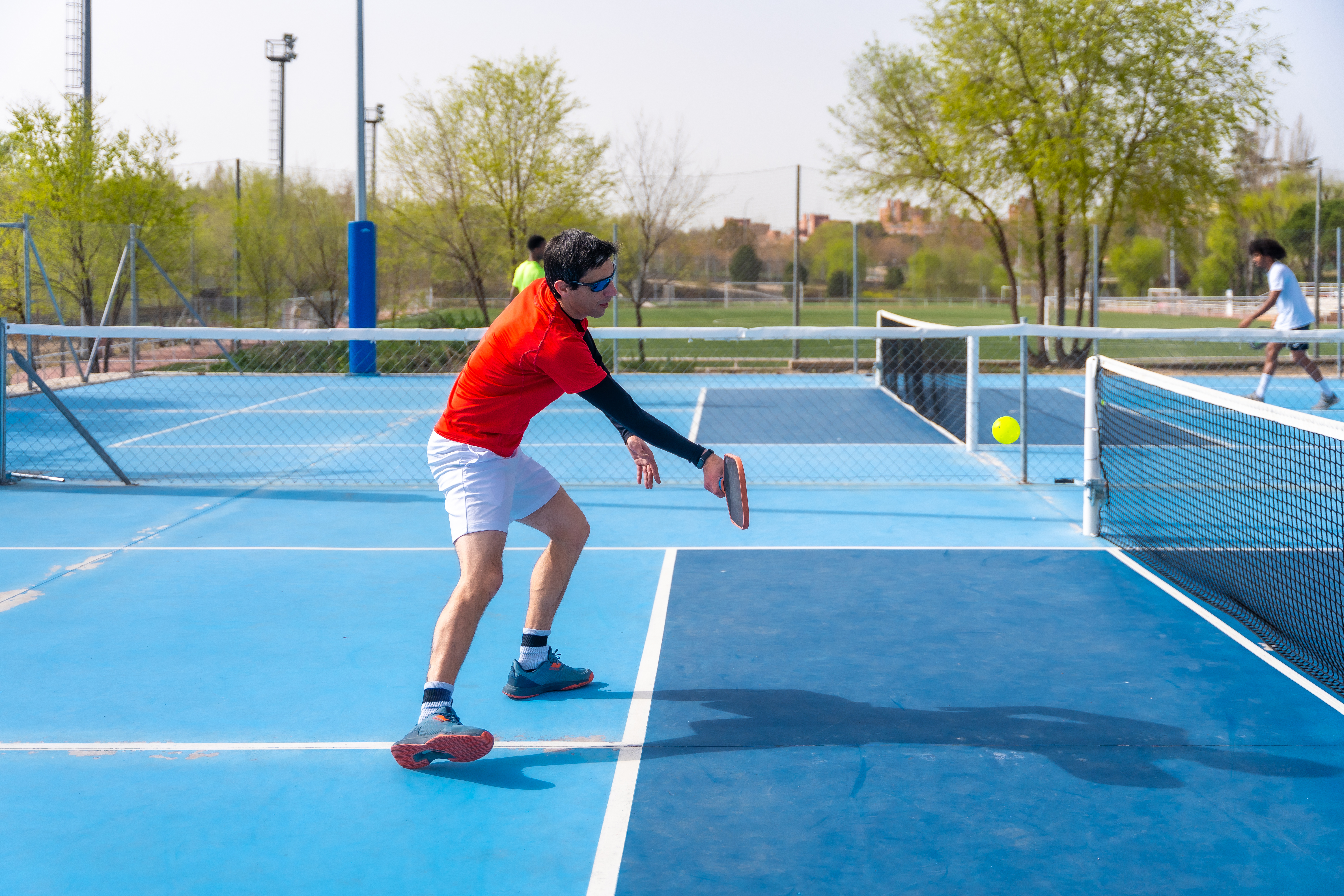
The old coaching wisdom said to hold your ground at the kitchen line and play what comes to you. Today’s best players flip that script entirely. They reach aggressively on every ball they can touch, extending their paddle into the space in front of them to take the ball early — then back up only if they can’t make the play.
This “reach first” mentality does two things. First, it takes time away from your opponents. When you’re hitting the ball six inches in front of the kitchen line instead of letting it bounce, you’re compressing the rally and forcing faster decisions. Second, it creates attacking angles that simply don’t exist when you play from a stationary position.
Watch Anna Leigh Waters play sometime. She doesn’t wait at the kitchen line — she stalks it. Every dink is a potential setup. Every short ball is a target. That mentality used to be the exception at the pro level. Now it’s the standard.
Smart Aggression vs. Dumb Aggression
Before you go banging every ball as hard as you can at your next open play session, let’s be clear: the shift toward aggression isn’t about swinging harder. It’s about being intentional about when and how you attack.
The old rule was to only speed up “green light” balls — anything sitting well above the net. The new approach is more nuanced: if you can get topspin on a borderline ball, you should probably be looking to roll it or attack it, especially if it’s out wide where your opponent has more court to cover.
Here are the principles that separate smart aggression from chaos:
Speed up balls that are out wide. When the ball bounces toward the sideline, you have multiple attacking options and your opponent has maximum ground to cover. Center-court speed-ups? That’s where smart aggression turns dumb — you’re hitting right into their wheelhouse.
Track the ball with your paddle tip after every dink. This tiny habit means you’re already in position before the attack even happens. Most rec players drop their paddle between shots, then scramble to get it up when the ball comes. By then, you’re reacting instead of dictating.
Move in an L-shape with your partner. When your partner gets pulled wide, slide toward the center to cover the gap. The number one way doubles teams give up points is leaving the middle open. Aggressive play only works if you’re covering the court that your aggression creates.
Use dinks as setups, not as your whole plan. Modern dinking isn’t about waiting for an error. It’s about moving the ball around to create the opening you want, then attacking it with purpose. Dink cross-court to push them wide. Dink short to draw them in. Then speed it up when the geometry is in your favor.
What This Means for Rec Players
Here’s where it gets real. You’re probably not playing against former D1 tennis players at your local rec center. So does any of this aggressive meta actually apply to you?
Yes — but with a critical adjustment.
At the 3.0-3.5 level, patience still wins more often than aggression because unforced errors decide most points. But even at that level, you can start building the habits that will carry you higher. Practice the hybrid third shot. Get comfortable reaching forward at the kitchen line. Learn to recognize the wide ball that’s begging to be sped up.
At 4.0 and above, this isn’t optional anymore. If you’re still playing the “dink and wait” game against players who have adopted smart aggression, you’re playing defense the entire match. You’ll feel like you’re doing everything right and still losing — because the game has moved and your strategy hasn’t.
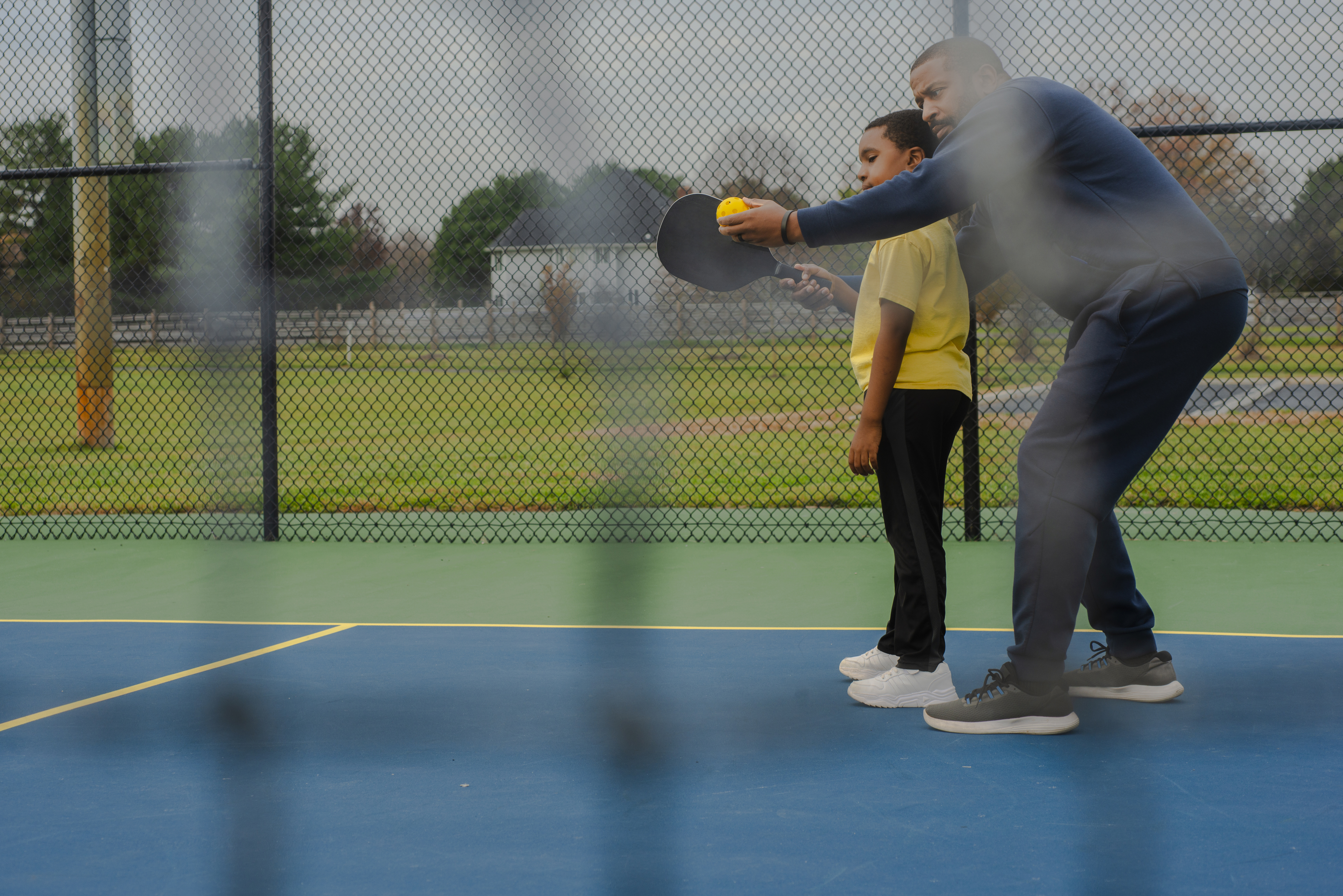
The transition doesn’t happen overnight. Start by adding one aggressive tool at a time. Maybe this week, you focus on taking dinks earlier — reaching forward instead of letting the ball come to you. Next week, work on the hybrid third shot in drilling sessions. Layer the skills gradually, and you won’t sacrifice consistency for aggression.
The Soft Game Isn’t Dead. It Just Got a Promotion.
Here’s the thing that gets lost in all the “aggressive pickleball” discourse: the soft game matters more than ever. It’s just not the end goal anymore — it’s the setup.
The best players in the world are still phenomenal dinkers. They’re just using those dinks differently. Every soft shot has a purpose. Every reset is buying time to find the next attack. The dink game didn’t die. It evolved from the main course into the appetizer.
So the next time someone at your local courts tells you to “just be patient,” smile and nod. Then practice your hybrid third shot, work on your forward reach, and learn to recognize the ball that’s asking to be attacked.
Because in modern pickleball, patience without a plan is just waiting to lose.