The Reset Shot: Your Ticket Out of Banger Hell
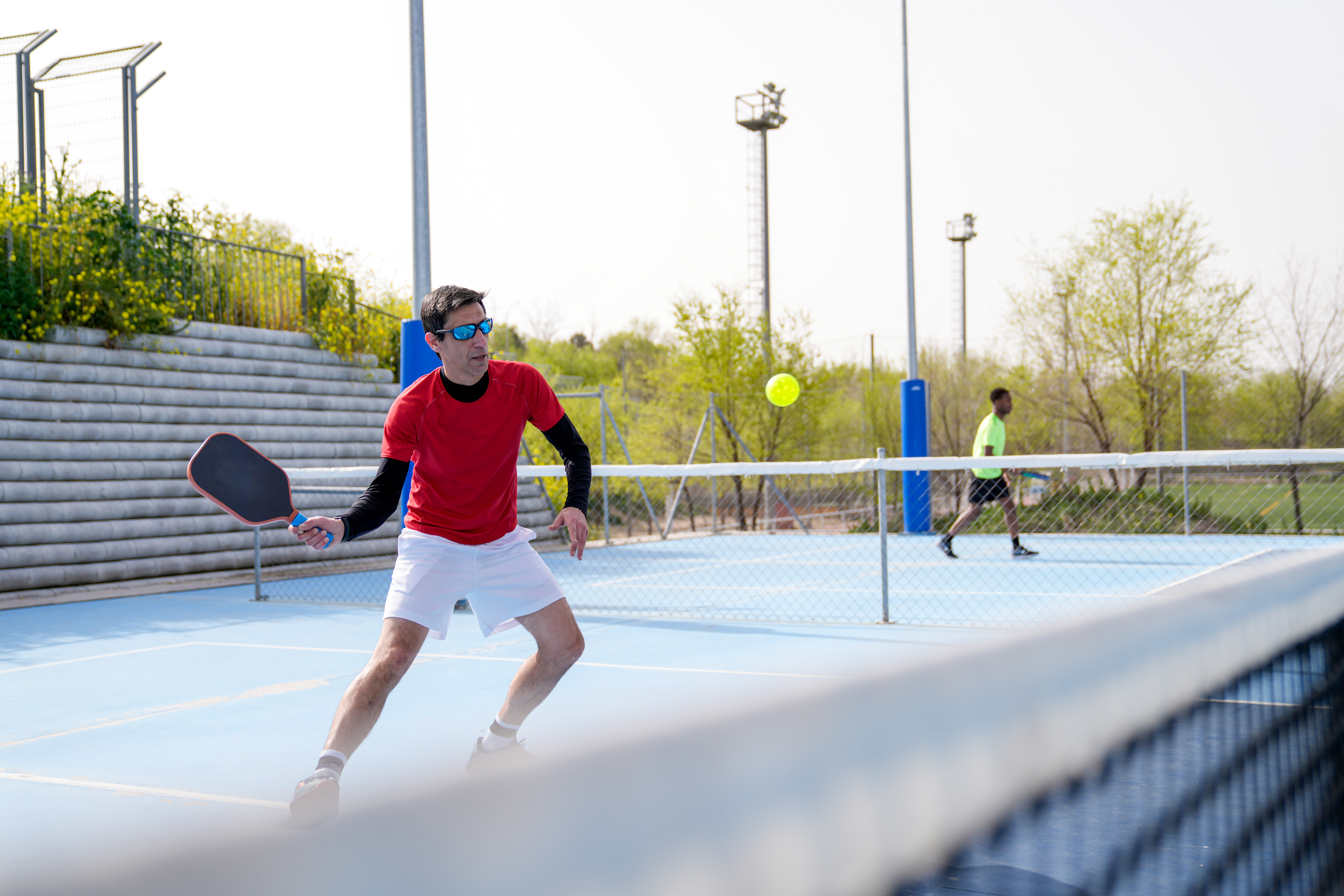
You know the guy. Every rec session has one. He’s a 4.0 — maybe a fading 4.5 trying to relive his glory days — and his entire strategy is to hit the ball as hard as he physically can, every single time, until somebody gets hurt or quits. He doesn’t drop. He doesn’t dink. He bangs. And after he’s banged you off the court for the third game in a row, you walked out to your car convinced you needed a new paddle, a new partner, or a new sport.
You don’t need any of those. You need a reset.
Why the Reset Beats the Drop
For about a decade, the pickleball internet has been screaming “third shot drop” at every rec player who’d listen. Drop the ball into the kitchen. Get to the line. Win the point. Beautiful theory. Useless when you’re playing somebody who just drove a 70 mph ball at your shoelaces and you’re not sure which direction your paddle is pointing.
The reset is the answer the third shot drop wishes it was. The drop is offensive — you choose the moment, you set the height, you control the pace. The reset is reactive — you take whatever the banger is feeding you and turn it into a pillow that lands two feet over the net and dies in the kitchen before your opponent can do anything with it.
In a game that has gotten dramatically faster over the past two seasons (hands battles, banger-first strategy, Gen-4 paddles that turn every drive into a heat-seeking missile), the reset is the great equalizer. It’s the only shot in pickleball that rewards being calmer than your opponent. And being calmer is the one thing rec players can do regardless of DUPR rating, age, or shoulder mobility.
What a Reset Actually Is
A reset is any shot — usually defensive, usually hit from the transition zone or from your knees somewhere in no-man’s-land — that takes the pace off an incoming ball and floats it softly into the kitchen. That’s it. It’s not flashy. It’s not aggressive. It will never end up on a highlight reel.
It is also the single most important shot in modern intermediate pickleball. The drive isn’t going anywhere. The bangers aren’t going anywhere. Your only options are to learn to neutralize their pace or to keep losing to people who haven’t improved at anything else in two years.
The Five Things Nobody Tells You About Reset Hands
1. Your grip is way too tight
Pros grip the paddle at a 2 or 3 out of 10 on a reset. You’re probably gripping it at a 7. A tight grip turns your paddle into a trampoline — every bit of incoming pace launches right back out at the same speed. A loose grip lets the paddle absorb pace like a catcher’s mitt.
If you’ve never consciously thought about grip pressure, that’s the problem right there. Try this next time you’re at the courts: dink with somebody, but every third shot, deliberately loosen your grip until the paddle almost falls out of your hand. That’s reset pressure. Live there.
2. The shot comes from your legs, not your arm
Watch any pro reset in slow motion. Their paddle barely moves. Their knees and hips are doing all the work — dropping the body so the paddle stays passively in the ball’s path, absorbing pace through the lower body.
If your arm is doing the work, you’re swinging. Swinging at a hard-hit ball with soft hands produces wild, floating disasters that pop up at chest height for an easy put-away. Stop the arm. Sink the legs. Let the paddle ride.
3. Your paddle face has to be more open than feels natural
A closed face sends the ball into the net. Every time. Especially when you’re trying to be soft. The paddle needs to open up like a shelf — the ball lands on the face, the face cradles it, the natural angle floats it over the net.
How open? More than your instincts will let you go. Almost like you’re presenting the face to the ceiling. Your brain will fight you on this. Trust the geometry, not the feeling.
4. You should be moving forward, not backward
The single biggest mistake rec players make under pressure is retreating. Banger drives a ball at your chest? You backpedal. Now you’re at the baseline, on your heels, with no angles and no time. That’s how points die.
Instead, when the drive comes, you split-step where you stand — even mid-transition — and reset from there. Then keep walking forward. The reset isn’t a “get me out of trouble” shot. It’s a “neutralize the rally and keep advancing toward the kitchen” shot. Always the kitchen. Always.
5. The kitchen line is your goal, not your landing zone
When most rec players try to reset, they aim for the kitchen line. Wrong target. Aim for two to three feet inside the kitchen line — closer to the net than feels safe. Why? Because the softest, lowest balls are the hardest to attack. A reset that lands at the kitchen line is shoulder-high to your opponent and just begs to get smacked. A reset that lands in the middle of the kitchen drops below their waist before they can swing.
Aim for the middle of the kitchen. The geometry will save you.
A 15-Minute Drill That Will Change Your Game
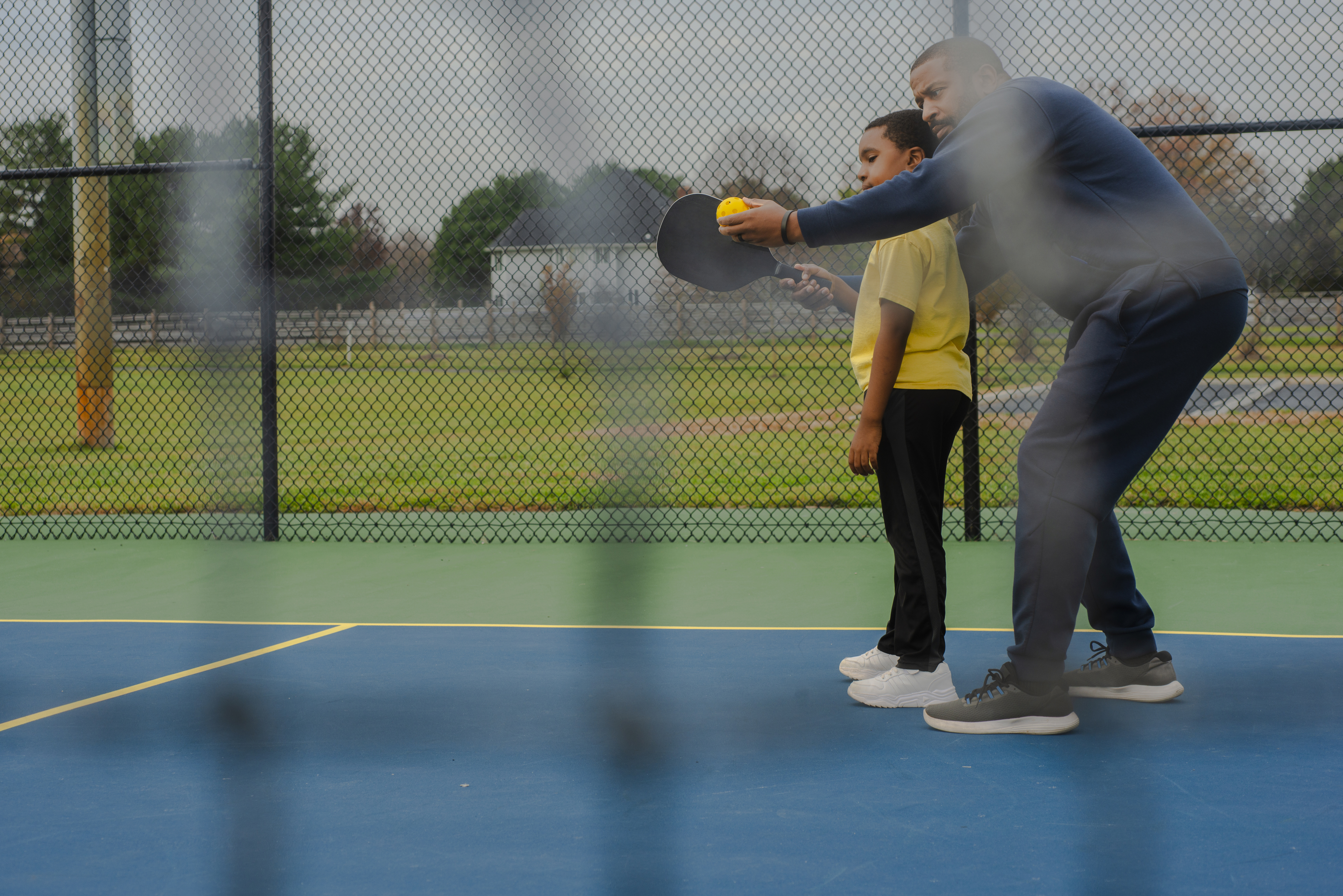
Find a partner. Stand at the baseline. Have them post up at their kitchen line and feed you medium-pace drives — not full bangers yet, just firm balls aimed at your feet and midsection. Your only job: reset every single one into the kitchen. Don’t try to win the point. Don’t try to drive it back. Just absorb and float.
Start with 50 reps. You’ll shank the first 20. By rep 35 something clicks. Your hands quiet down. Your knees start doing the work without you asking them to. Your paddle face opens up automatically.
Then make it harder. Have them feed faster. Move yourself between transition zone and baseline so you have to reset from different positions. Mix in occasional high balls to make sure your eyes are tracking, not just your muscle memory.
Run this drill twice a week for a month. The transformation isn’t subtle. You’ll feel it the first time you face a real banger and realize you’re not panicking anymore.
The Real Win
Here’s what nobody tells you about resets: they’re a psychological weapon dressed up as a defensive shot. The banger across the net is there because hitting hard is fun and, against most rec players, devastatingly effective. He is not used to playing defense. He is not used to dinking. He is definitely not used to seeing his three best drives all come back as little floaters that land at his shoelaces.
The first time you absorb three drives in a row and float them softly into his kitchen, you can watch him deflate in real time. He’s now in a dink rally — his least favorite place on a pickleball court — and his only options are to (a) try to bang harder, which means he’ll miss, or (b) actually play pickleball, which he does not know how to do.
Either way, you win.
The reset isn’t a glamour shot. There’s no Anna Leigh Waters reset compilation on Instagram, no slow-motion Ben Johns highlight set to dramatic music. But this is the shot that drops the banger, ends the slugfest, and turns rec play from a survival exercise back into the sport you actually signed up for.
Get loose. Get low. Get reset.